

Home » Stock Market » Page 29
The stock market is a dynamic and ever-changing environment, influenced by economic data, corporate earnings, and global events. Whether you’re a seasoned investor or just starting, staying informed is crucial to making smart financial decisions. In this blog, we’ll explore the latest trends, key factors driving the market, and top stock picks for 2025.
Major technology companies continue to drive market growth. As of February 2025:
Tech stocks remain strong due to innovation and robust earnings reports.
Fluctuating oil prices and geopolitical tensions have affected the energy sector:
Investors should closely monitor energy price movements and global developments.
Indicators such as unemployment rates, inflation, and GDP growth shape market trends. A stable unemployment rate has boosted consumer confidence and spending, driving stock prices higher.
Strong earnings reports fuel market rallies, while disappointing results lead to sell-offs:
The Federal Reserve’s stance on interest rates directly affects borrowing costs and investment strategies. Recent reports suggest a cautious approach to rate adjustments in 2025.
Spreading investments across various sectors reduces risk and enhances long-term stability.
Avoid impulsive trading based on short-term fluctuations. Stick to a well-researched strategy aligned with long-term financial objectives.
A professional can help align investments with your risk tolerance and financial goals.
The stock market today offers both challenges and opportunities. By staying updated on market trends, understanding key influencing factors, and choosing the right stocks, investors can navigate the financial landscape with confidence. Keep a strategic approach, stay informed, and make decisions based on research and long-term growth potential.
Want to take your investment knowledge to the next level? Our expert-led course will teach you everything you need to know about stock market investing, from fundamental analysis to risk management. Join now and start making smarter investment decisions today!

Investing in the stock market requires careful planning, research, and strategy. With so many options available, selecting the right investments can be overwhelming. This guide will help you understand how to choose stocks wisely and maximize your returns.
Investment picks refer to specific stocks, exchange-traded funds (ETFs), mutual funds, or other financial assets selected based on various criteria such as financial performance, market trends, risk assessment, and potential growth. These selections are made by individual investors, financial analysts, or investment firms to maximize returns while managing risk.
Before diving into stock selection, it’s essential to understand what makes an investment valuable. Successful investing requires balancing risk and reward while focusing on long-term growth. Additionally, understanding market conditions and industry trends can help in identifying profitable opportunities.
To select the right investments, consider these key factors:
Review a company’s financial health, including revenue, profit margins, and debt levels.
Analyze key ratios like Price-to-Earnings (P/E), Return on Equity (ROE), and Earnings Per Share (EPS).
Check past performance and future growth potential.
Study stock charts, trends, and price movements.
Use indicators like Moving Averages, RSI (Relative Strength Index), and MACD (Moving Average Convergence Divergence).
Identify potential entry and exit points.
Keep an eye on interest rates, inflation, and global economic trends.
Follow industry-specific trends and emerging sectors.
Monitor company earnings reports and analyst forecasts.
Based on research and expert analysis, here are some top investment choices for this year:
Tech giants continue to dominate the market. Companies like Apple, Microsoft, and Google offer strong fundamentals and growth potential.
With a global push towards sustainability, investing in green energy companies like Tesla and NextEra Energy could provide long-term gains.
Pharmaceutical and healthcare companies remain strong investment options due to continuous innovation and increasing demand.
Reliable dividend-paying stocks such as Johnson & Johnson and Procter & Gamble provide consistent returns and stability.
Emerging companies with high growth potential, especially in AI and fintech, are becoming attractive investment opportunities for long-term gains.
Investing always carries risks. Here are some strategies to manage risk while selecting investments:
Diversification: Spread investments across different sectors and asset classes.
Stop-Loss Orders: Set predetermined levels to minimize losses.
Long-Term Perspective: Avoid emotional trading and focus on long-term gains.
Regular Portfolio Review: Continuously analyze and adjust your investments based on market conditions.
Choosing the right investments requires thorough research, patience, and strategic planning. By combining fundamental analysis, technical analysis, and market trends, you can make informed decisions and grow your portfolio successfully. Keep learning, stay updated, and invest wisely!
Are you ready to explore the best investment opportunities? Start researching today and build a profitable stock market portfolio!
Sources: This article is based on information from trusted financial sources, including Investopedia, SCHWAB, USNews, and Sarwa.
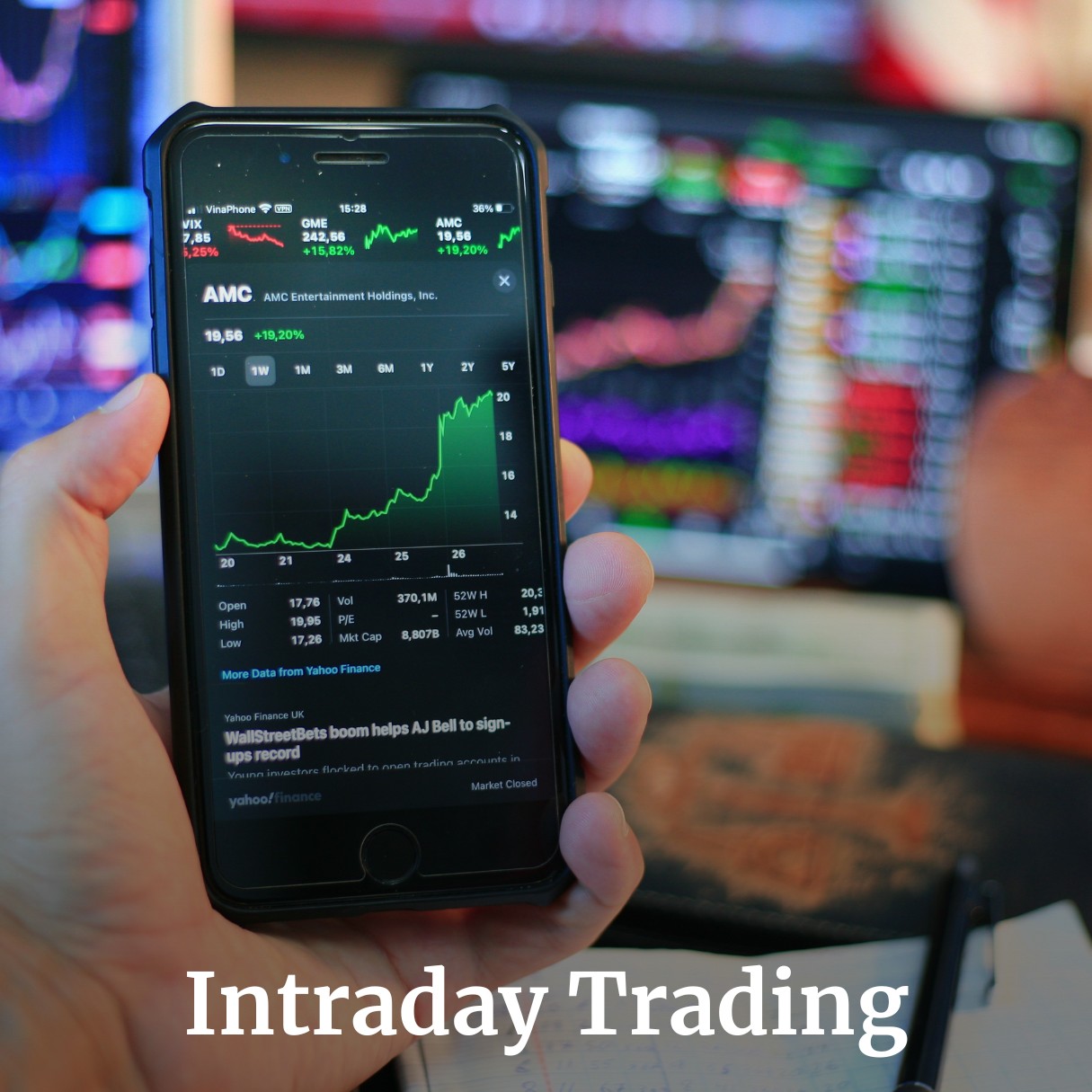
Intraday trading is a popular way to profit from short-term market movements by buying and selling stocks within the same trading day. Unlike long-term investing, this approach focuses on taking advantage of small price changes to make quick profits. While it can be exciting and rewarding, it’s also risky and requires skill, discipline, and a solid strategy. In this guide, we’ll break down what intraday trading is, how it works, and share tips to help you get started.
Intraday trading involves opening and closing positions within the same day. The goal is to profit from small price fluctuations in highly liquid stocks or indices. Traders use technical analysis, charts, and indicators to identify entry and exit points, making it a fast-paced and dynamic form of trading.
Short-Term Focus: Trades last minutes or hours, not days or weeks.
High Liquidity: Traders focus on stocks with high trading volumes for easy entry and exit.
Leverage: Many traders use borrowed funds to increase potential gains (and losses).
No Overnight Risk: Positions are closed before the market closes.
This approach offers the chance to make money in a short time. For example, a well-timed trade during a volatile market can yield significant returns.
Since positions are closed before the market closes, traders don’t have to worry about unexpected news affecting their holdings overnight.
Brokers often provide leverage, allowing traders to control larger positions with less capital.
It can be done from anywhere with an internet connection, making it ideal for those who want to trade full-time or as a side hustle.
While it can be lucrative, it’s not without risks:
High Volatility: Prices can swing dramatically in a short period, leading to significant losses.
Emotional Stress: The fast-paced nature of trading can be mentally exhausting.
Leverage Risks: While leverage can amplify gains, it can also magnify losses.
Requires Skill and Discipline: Success requires a deep understanding of the market and strict adherence to a trading plan.
Focus on highly liquid stocks with high trading volumes. These stocks tend to have tighter bid-ask spreads, making it easier to enter and exit positions.
Traders rely heavily on technical analysis to identify trends and patterns. Common tools include:
Candlestick Charts: To visualize price movements.
Moving Averages: To identify trends.
Relative Strength Index (RSI): To gauge overbought or oversold conditions.
Always define your risk and reward before entering a trade. Use stop-loss orders to limit losses and set target levels to lock in profits.
Keep an eye on market-moving news, earnings reports, and economic indicators that can impact stock prices.
Begin with a small capital allocation and gradually increase your position size as you gain experience and confidence.
Develop a clear trading plan and stick to it. Avoid impulsive decisions based on emotions like fear or greed.
Scalping involves making multiple small trades throughout the day to capture minor price movements. It requires quick decision-making and execution.
This strategy involves identifying stocks that are trending strongly in one direction and riding the momentum for quick profits.
Traders look for stocks that break through key support or resistance levels, signaling a potential trend continuation.
This strategy involves buying at support levels and selling at resistance levels within a defined price range.
Intraday trading can be an exciting and profitable venture, but it’s not for everyone. It requires a significant time commitment, a solid understanding of the market, and the ability to handle stress and risk. If you’re new to trading, consider starting with a demo account to practice your strategies before risking real money.
Remember, the key to success is discipline, risk management, and continuous learning. Start small, stay informed, and always prioritize protecting your capital.
You can also check out this article on day trading from Investopedia on day trading.

The stock market offers a variety of instruments to help investors grow their wealth, and among the most popular are futures and options. These financial derivatives can be powerful tools for hedging risks, speculating on price movements, and enhancing portfolio returns. However, they come with their own set of complexities and risks. In this guide, we’ll break down what futures and options are, how they work, and how you can use them effectively in your trading strategy.
Futures and options are derivative instruments, meaning their value is derived from an underlying asset like stocks, commodities, or indices. While they share similarities, they serve different purposes and have unique characteristics.
A future contract is an agreement to buy or sell an asset at a predetermined price and date in the future. Both parties are obligated to fulfill the contract when it expires. Futures are commonly used for:
Hedging: Protecting against price fluctuations in commodities like oil or agricultural products.
Speculation: Betting on the future price movement of an asset.
An options contract gives the buyer the right, but not the obligation, to buy (call option) or sell (put option) an asset at a specific price before a certain date. Options are popular for:
Leverage: Gaining exposure to an asset with a smaller upfront investment.
Risk Management: Limiting potential losses while maintaining upside potential.
| Aspect | Futures | Options |
|---|---|---|
| Obligation | Binding contract for both parties | Buyer has the right, not the obligation |
| Risk | Higher risk due to obligation | Limited risk for buyers |
| Cost | Requires margin (initial deposit) | Requires premium (upfront cost) |
| Profit Potential | Unlimited for both buyers and sellers | Unlimited for buyers, limited for sellers |
Futures and options are widely used to protect against adverse price movements. For example:
A farmer can use futures to lock in a price for their crops.
An investor can use put options to protect their stock portfolio from a market downturn.
Derivatives allow you to control a large position with a relatively small amount of capital. This amplifies potential gains—but also potential losses.
Traders can profit from price movements without owning the underlying asset. For instance, buying a call option on a stock you believe will rise in value.
Futures and options provide exposure to a wide range of assets, including commodities, currencies, and indices, helping you diversify your portfolio.
While futures and options offer significant opportunities, they also come with risks:
Leverage Risk: Small price movements can lead to large losses.
Complexity: These instruments require a deep understanding of market dynamics.
Time Decay (Options): Options lose value as they approach their expiration date.
Obligation (Futures): Futures contracts must be fulfilled, regardless of market conditions.
Before diving into derivatives trading, take the time to learn how futures and options work. Resources like books, online courses, and demo accounts can help you build confidence.
Begin with a small position to understand the mechanics and risks involved. Avoid over-leveraging, especially as a beginner.
Set stop-loss orders to limit potential losses. This is especially important in futures trading, where losses can escalate quickly.
Trade in highly liquid markets to ensure you can enter and exit positions easily without significant price slippage.
Stay updated on economic indicators, earnings reports, and geopolitical events that can impact the underlying assets.
Futures and options can be powerful tools for experienced traders, but they’re not suitable for everyone. If you’re new to the stock market, it’s essential to start with a solid foundation in basic investing before venturing into derivatives. For those willing to put in the time and effort to learn, futures and options can open up new opportunities for profit and risk management.
Remember, the key to success in derivatives trading is knowledge, discipline, and risk management. Start small, stay informed, and always prioritize protecting your capital.
The stock market can be a thrilling place to grow your wealth, but it’s also fraught with risks. Whether you’re a seasoned investor or just starting out, understanding and implementing risk management strategies is crucial to safeguarding your investments. In this guide, we’ll explore what risk management is, why it matters, and actionable tips to help you navigate the stock market with confidence.
Risk management is the process of identifying, assessing, and mitigating potential risks that could negatively impact your investments. In the context of the stock market, it involves strategies and tools designed to protect your portfolio from significant losses while allowing you to capitalize on growth opportunities. Think of it as a safety net—it doesn’t guarantee profits, but it helps you avoid catastrophic losses and stay on track toward your financial goals.
The stock market is inherently unpredictable. Prices can swing dramatically due to economic events, geopolitical tensions, or even company-specific news. Without a solid risk management plan, you could face significant losses that derail your financial goals.
Risk management isn’t about avoiding risks altogether—it’s about minimizing potential losses while maximizing opportunities for growth. By adopting a disciplined approach, you can protect your portfolio from volatility and make more informed investment decisions.
Diversification is one of the most effective ways to manage risk. By spreading your investments across different asset classes, sectors, and geographies, you reduce the impact of a single underperforming investment. For example:
Invest in a mix of stocks, bonds, and ETFs.
Allocate funds across industries like technology, healthcare, and energy.
Consider international markets to balance domestic risks.
A stop-loss order automatically sells a stock when it reaches a predetermined price. This tool helps you limit losses and avoid emotional decision-making during market downturns. For instance, if you buy a stock at 50,youmightsetastop−lossorderat50,youmightsetastop−lossorderat45 to cap your loss at 10%.
Every investor has a unique risk tolerance based on their financial goals, time horizon, and comfort level with volatility. Ask yourself:
How much can I afford to lose without impacting my financial stability?
Am I investing for the short term or long term?
Am I comfortable with high-risk, high-reward investments, or do I prefer steady, low-risk options?
Knowing your risk tolerance helps you build a portfolio that aligns with your goals and personality.
Leverage, such as trading on margin, can amplify gains—but it can also magnify losses. Over-leveraging is a common pitfall that can lead to significant financial setbacks. Use leverage cautiously and only if you fully understand the risks involved.
The stock market is constantly evolving. Stay updated on market trends, economic indicators, and company performance. Regularly review and adjust your portfolio to ensure it remains aligned with your risk management strategy.
Even experienced investors can fall into traps that undermine their risk management efforts. Here are some mistakes to watch out for:
Emotional Trading: Letting fear or greed drive your decisions can lead to impulsive actions. Stick to your plan.
Chasing Trends: Jumping into hot stocks without proper research can be risky. Always analyze fundamentals before investing.
Ignoring Diversification: Over-concentrating in a single stock or sector exposes you to unnecessary risk.
Technical Analysis: Study price charts and patterns to identify trends and potential entry/exit points.
Fundamental Analysis: Evaluate a company’s financial health, earnings, and growth prospects to make informed decisions.
Index funds and ETFs offer built-in diversification and are less volatile than individual stocks. They’re an excellent option for risk-averse investors.
Over time, your portfolio’s asset allocation may drift due to market performance. Rebalancing ensures your investments stay aligned with your risk tolerance and goals.
Hedging involves using financial instruments like options or futures to offset potential losses. While complex, it can be an effective way to manage risk in volatile markets.
The stock market offers immense opportunities, but it’s not without risks. By implementing a robust risk management strategy, you can protect your investments and navigate market volatility with confidence. Remember, successful investing isn’t just about picking the right stocks—it’s about managing risk effectively to achieve long-term financial success.
Start small, stay disciplined, and always prioritize protecting your capital. With the right approach, you can turn the stock market into a powerful tool for building wealth.
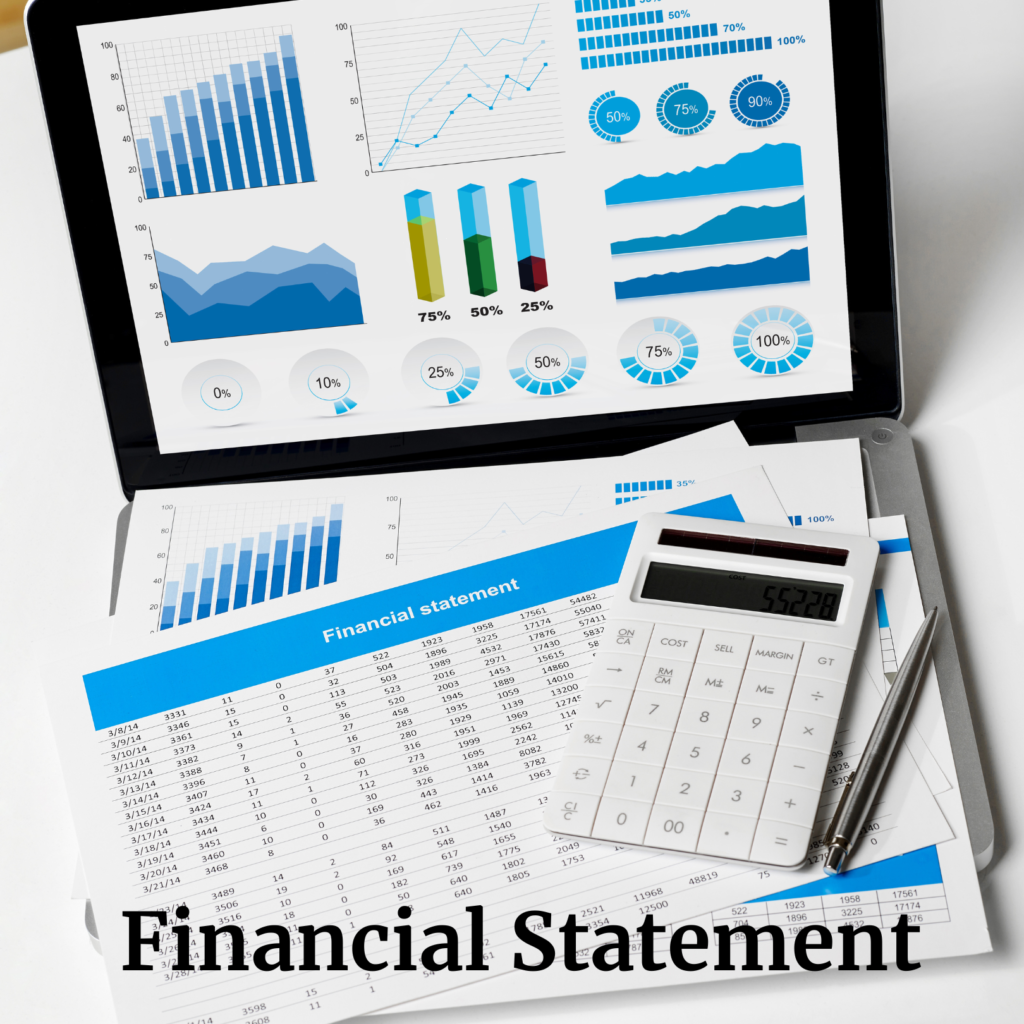
Financial statement analysis is a really important tool for investors looking to make informed decisions in the stock market. By analysing financial reports, investors can assess a company’s profitability, financial health, and growth potential. The three primary financial statements used for analysis are the Income Statement, Balance Sheet, and Cash Flow Statement.
Understanding these statements can help investors determine whether a stock is undervalued, overvalued, or fairly priced. Learning to read and interpret financial statements of companies is essential for assessing their financial health and performance.
The income statement provides insights into a company’s profitability over a specific period. Key components include:
Key Ratios:
The balance sheet provides a snapshot of a company’s financial position at a given time. It consists of three main sections:
Key Ratios:
The cash flow statement tracks the movement of cash in and out of the business, divided into three categories:
Key Ratios:
Financial ratios help compare companies within the same industry and assess financial health. Common ratios include:
While financial statements provide valuable insights, investors must be aware of their limitations:
Financial statement analysis is an essential practice for stock market investors. By examining the income statement, balance sheet, and cash flow statement, investors can assess a company’s profitability, stability, and growth potential. However, it is crucial to combine financial analysis with market trends, industry outlooks, and qualitative factors to make well-informed investment decisions. Learning to read and interpret financial statements of companies is a key skill for evaluating their financial health and performance.
Imagine you’re about to buy a car. Would you purchase it just because it looks good? Of course not! You’d check the engine, fuel efficiency, safety ratings, and even compare it to other models before making a decision. Investing in stocks is no different. If you’re buying shares in a company, you need to look beyond the stock price and understand how financially strong the company is. That’s where Fundamental Analysis comes in!
In this article, you’ll learn how to evaluate a company’s financial health, assess its true value, and make informed investment decisions like a pro.
Fundamental analysis is a method used by investors to determine a stock’s real worth by examining a company’s financial health, industry trends, and overall market conditions.
Unlike technical analysis, which focuses on price movements and charts, fundamental analysis looks at the core strength of a company to predict its future growth.
To truly understand a company, you need to read its financial reports like an investor detective!
These key indicators help investors judge whether a company is worth investing in:
Ratio | What It Measures | Why It Matters |
Earnings Per Share (EPS) | Profit per share | Higher EPS = More Profitable |
Price-to-Earnings (P/E) Ratio | Stock price vs. earnings | Low P/E = Undervalued Stock |
Debt-to-Equity Ratio | Debt vs. shareholders’ equity | Lower = Less Financial Risk |
Return on Equity (ROE) | Profitability for investors | Higher = More Efficient Business |
Before investing, compare these ratios with industry benchmarks to get a clearer picture.
Numbers alone don’t tell the whole story. You must also consider:
For example, Tesla isn’t just a car company—it’s a leader in electric vehicle innovation. That adds value beyond financial reports.
Want to analyze a stock like a pro? Follow these 5 easy steps:
Pros:
Cons:
If you’re a long-term investor looking to build wealth smartly, fundamental analysis is an essential tool. It helps you invest based on facts, not hype, reducing risk and increasing your chances of success in the stock market.
So, next time someone says, “Buy this stock, it’s going up!”—take a step back, check the fundamentals, and make a smart, informed decision.
Read: “Technical Analysis”

Imagine you’re on a treasure hunt, but instead of a traditional map, you have powerful charts and historical data. Each step you take is based on key patterns that reveal hidden opportunities in the stock market. This is where Technical Analysis comes in—an essential tool that helps traders understand market trends and make smarter investment decisions. By studying past price movements and market behaviors, it allows you to predict future price directions, guiding you to more informed and confident trading choices. In the world of stock trading, mastering technical analysis can be the key to uncovering valuable insights and maximizing your returns.
So, what is technical analysis? It is based on the assumption that market prices follow trends and that historical price patterns tend to repeat. By studying past price movements, traders can make informed decisions about buying or selling stocks or holding it for future gain.
To analyze stock prices effectively, traders use different tools and indicators. Here are some of the most commonly used ones:
Stock price movements are visualized through charts. The most popular chart types include:
Common chart patterns include:
Technical indicators help traders analyze price trends and momentum. Some key indicators include:
While technical analysis is a powerful tool, it has some limitations:
Technical analysis is a valuable skill for traders looking to understand market trends and make informed decisions. By using charts, patterns, and indicators, traders can increase their chances of making profitable trades. However, it is essential to combine technical analysis with risk management and continuous learning to improve trading success.
This article is for informational purposes only and does not constitute financial advice. But, If you want to learn more than contact us.

The stock market can seem complex and overwhelming, but learning and understanding its fundamentals is the first step toward making informed investment decisions. Whether you’re a beginner looking to invest or simply curious about how the stock market really works, this article on the stock market’s fundamentals will lay a solid foundation for you by covering the basics of stocks, bonds, market trends, and economic forces that influence prices like influencers and big frame actors influence the people.
What is stock market? The stock market is a marketplace where shares of publicly traded companies are bought and sold, just like a normal market in cities where you buy something from a vendor and the vendor sells something to the customer.
It provides a platform for companies to raise capital and for investors to earn returns on their investments, for e.g. Imagine a big shopping mall where different brands have their stores. People come to buy and sell products. Now, think of the stock market as a giant marketplace where companies (like brands) have their shares listed instead of products. Investors (like shoppers) buy and sell shares of these companies based on their value and future potential.
Just like that in stock market When we buy shares of a company, we are investing in its growth. If the company makes a profit, shareholders (like us) can earn a portion of that profit. Major stock exchanges in the world include the New York Stock Exchange (NYSE), NASDAQ, and London Stock Exchange (LSE).
A stock represents ownership in a company. Like I owned a share in my friend’s business. When you buy a share, you own a portion of that company and are entitled to a share of its profits (it’s also called dividends if you wanna sound professional) and potential capital appreciation. There are two types of stocks:
Common Stocks: Provide you voting rights and dividends, you and all the other investors in the company have rights to choose who can lead the company. (If issued).
Preferred Stocks: Higher claim on earnings and assets but usually no voting rights. You will have higher claim in the company’s profits and all, but no claim over company’s decisions.
Bonds are practically loans made by investors to companies or governments. In return, the issuer agrees to pay interest over time and repay the principal amount at maturity. Bonds are considered less risky compared to stocks but offer lower returns.
Market trends indicates the general direction in which stock prices are moving. They are classified as:
Bull Market: Rising stock prices and investor optimism.
Bear Market: Falling stock prices and investor pessimism.
Sideways Market: Prices fluctuate within a certain range without a clear upward or downward trend.
Several economic forces influence stock prices and market trends:
Understanding stock market fundamentals is very important for making informed investment choices, or you can lose a lot of money. By grasping the basics of stocks, bonds, market trends, and economic influences, beginners can confidently navigate the financial markets and can make huge profits. Remember, investing is a journey—start small, don’t jump without knowing the market, stay informed, and think of a long-term plan for financial success. Still feeling confused and you want to learn all of this then you’re in luck cause Yourpaathshaala offers a very detailed course in stock market at Raipur, Chhattisgarh so contact us and get to learn more.